
DiMethylthiotoluenediaMine (DMTDA) cas 106264-79-3
DimethylthioToluene Diamie / DMTDA, CAS number. 106264-79-3, is a diamines curative for both TDI and MDI systems. Being a viscous liquid at room temperature results in significant processing advantages, i.e. easy transferring, ready to use without melting down the solids like MOCA does. DMTDA is an ideal curing agent used to make durable and flexible polyurethane/polyurea elastomers.
DMTDA can be both a curing agent and a chain extender for diisocyanate pre-polymers, especially for polyurea system providing with good mechanical and dynamic properties. DMTDA is an universal curing agent to combined with other liquid diamines, for example DETDA, to vary curing rates and mechanical properties to meet different requirements. Therefore, there is a wide application of DMTDA on polyurethane wheels, tires, casters, rollers, elastomeric coatings and so on. You can find DMTDA-base finished products everywhere, including construction, mining, automotive, electronics, textiles and printing areas.
Unlike MOCA, 4,4'-Methylenebis(2-chloroaniline), DMTDA is not suspected carcinogens. It’s eco-friendly, non-toxic and safe for workers to handle with during the processing. Benefits with being in liquid form, DMTDA won’t cause any toxic dust, fumes nor vapors while operation. Therefore, workers won’t be exposed to the danger while handling with DMTDA. In early times, the EU polyurethane producers use MOCA as the main curing agent for TDI-based polyurethane systems due to it’s low-price, excellent performance on tensile strength, durability, resiliency and abrasion resistance. In order to protect workers and the environment, more and more countries forbidden the usage of MOCA, thus, it forces polyurethane producers to find the MOCA substitute, the DMTDA, also called liquid MOCA. DMTDA eliminates most of the health hazards associated with handling MOCA and provide excellent physical properties in comparison of MOCA-based polyurethanes/polyureas elastomers.
There is another crucial advantage of DMTDA comparing with MOCA. Since DMTDA is in liquid form, it allows operation at lower temperature than MOCA does. Without melting process which is a must on MOCA, you can save much energy cost during manufacturing. The possibility of solidification does not occur in mixing containers or mixing machines. Additionally, it can be handled at lower temperatures than MOCA for its liquid state. The equivalent weight of DMTDA is 107 comparing with MOCA is 133.5. This means a 20% reduction in weight of prepolymer at the same stoichiometr
DMTDA is used as PU curing agent. It can slow down the activity of "NH2" group, thus, to extend the pot life while casting.
DMTDA , being a liquid at room temperature result in a significant processing advantage in comparison of MOCA, melting down of solids is unnecessary. Also, its liquid form allows to process prepolymer at lower temperature than that of MOCA and without solidification during the mixing. DMTDA has an equivalent weight of 107 compared to 133.5 of MOCA. This means that about 20% less by weight is required for a given prepolymer at the same stoichiometry.
Comparing of Physical Properties of Prepolymer Cured with DMTDA & MOCA
The physical properties of prepolymer, both ether and ester types, when cured with DMTDA curing agent, are comparable to those based with MOCA. As in MOCA curing system, physical properties are sensitive to the ration (stoichiometry) of curative to prepolymer. DMTDA curative exhibition tolerance to stoichiomety variations similar to that of MOCA. Low stoichiomety (80~90%) generally tends to maximize compression set resistance, while high stoichiomety (100-105%) tends to maximize tear strength and flex life. The best results for most application are obtained at about 95% stoichiometry. While cure conditions (temperature and times) are similar to those used with MOCA, DMTDA curative requires closer attention to post cure conditions to obtain maximum physical properties, particularly for compression set and dynamic properties.
DMTDA is widely used in coating systems in architectural, automotive, marine and industrial maintenance fields. DMTDA-based polyurethanes coating is with high performance, such as toughness and elasticity, high strength, waterproof, weather resistance, abrasion resistance, scratch and corrosion resistance. DMTDA-based polyurethanes can be applied through different coating techniques to substrates, i.e. metals, wood, concrete, masonry and plastic surfaces.
DMTDA also can be used as the epoxy resin curing agent/insulation material and PU elastomers, such as polyurethane and polyurea used for everything from high durable coatings to flexible foam seals, even wheels and tires. In addition, DMTDA can applied on automobile, building, mining, textile, printing rollers, trolley wheels, adhesives and electronic industries.
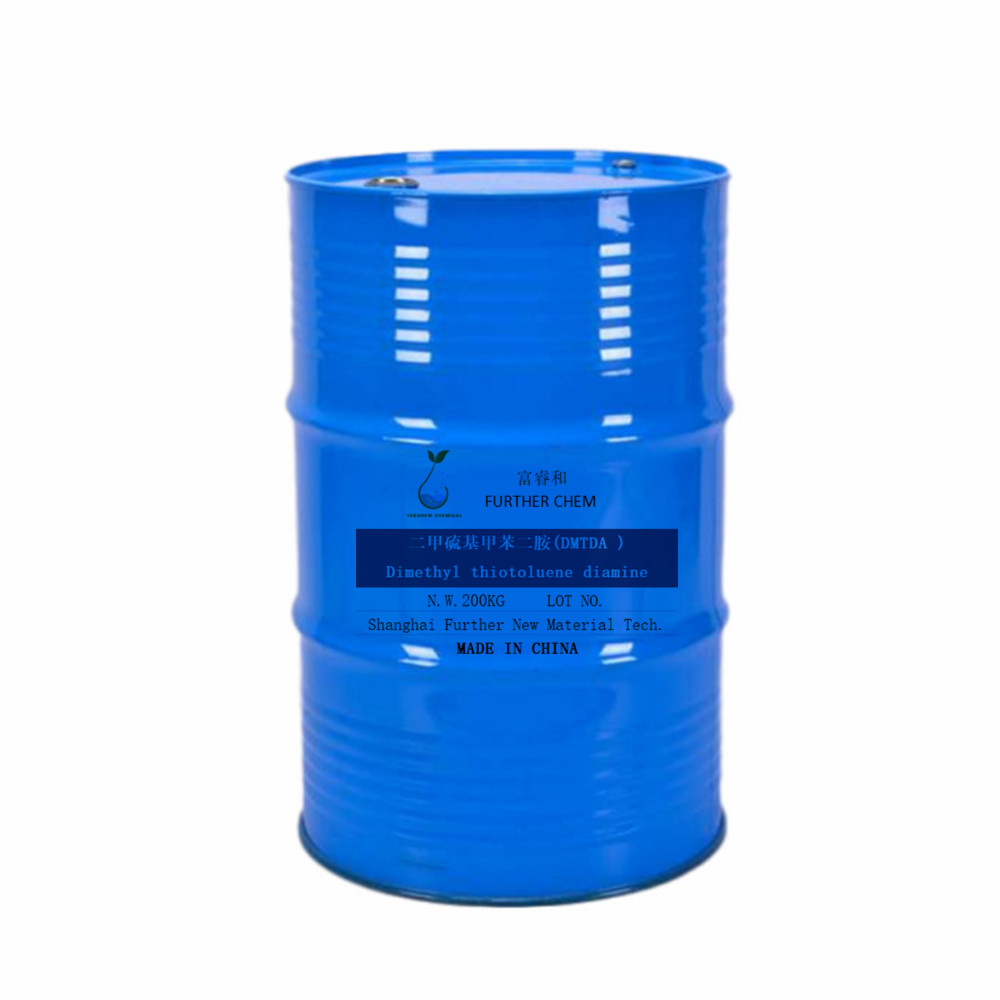
Packing: 25kg, 200kg/iron drum. or IBC TANK.
Storage and transportation: Avoid contacting with water. Keep away from sunlight.
Shelf life: 12 moths
|
Item |
Index |
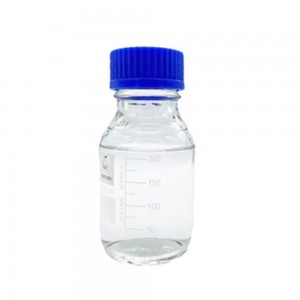
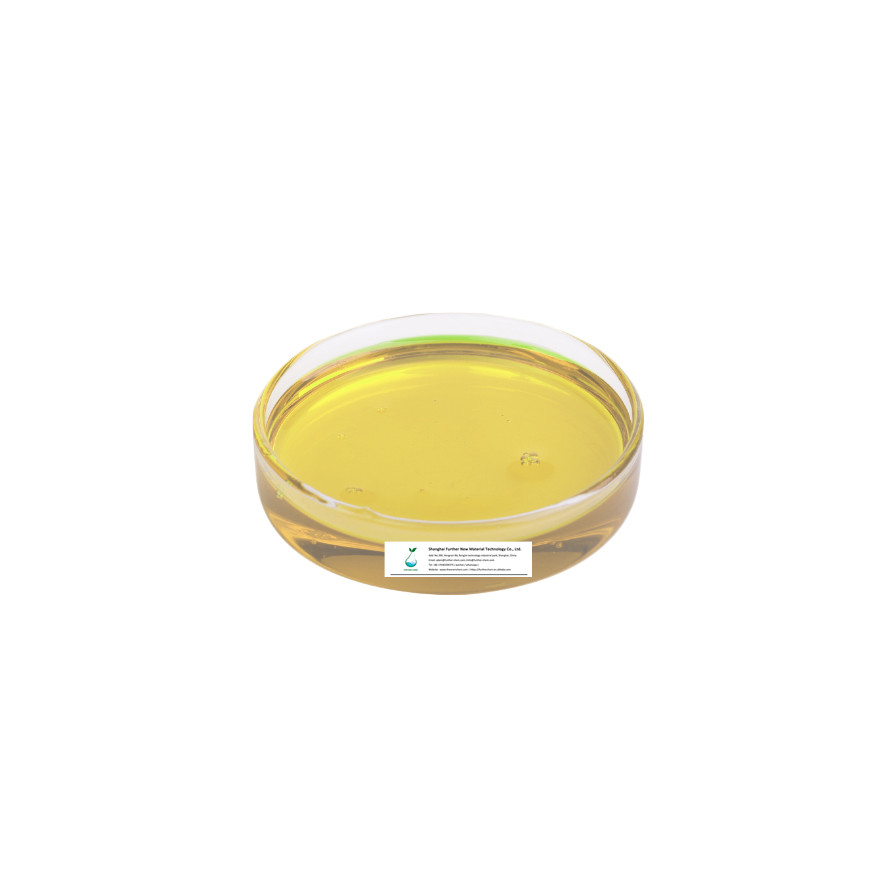
| Appearance | Light yellow to yellow transparent liquid |
| odor | Amine-like |
| Content of total Diamine | 99%min |
| Dimethylthiotoluenediamine | 95%min |
| Monomethylthiotoluenediamine | 4%max |
| Trimethylthiotoluenediamine | 1%max |
| TDA content | 0.1%max |
| Color, Gardner color scale | 2-8 |
| Amine value (mgKOH / g) | 520-540 |
| Moisture (%) | 0.1%max |
|
1. |
|
|
2. |
|
|
3. |
|
|
4. |
|
|
5. |
|
|
6. |
TDI 80/20 |
| 7. | TDI-Bases Polyisoyanurate(RC) |
| 8. | NDI(1,5-Naphthalene Diisocyanate) CAS 3173-72-6 |
| 9. | RF(JQ-4) |
| 10. | RN |
| 11. | DETDA CAS 68479-98-1 |
| 12. | DMTDA CAS 106264-79-3 |
| 13. | MMEA CAS 19900-72-2 |
| 14. | TODI CAS 91-97-4 |
| 15. | TEOF CAS 122-51-0 |
| 16. | MOCA CAS 101-14-4 |
| 17. | PTSI CAS 4083-64-1 |
| 18. | etc... |