




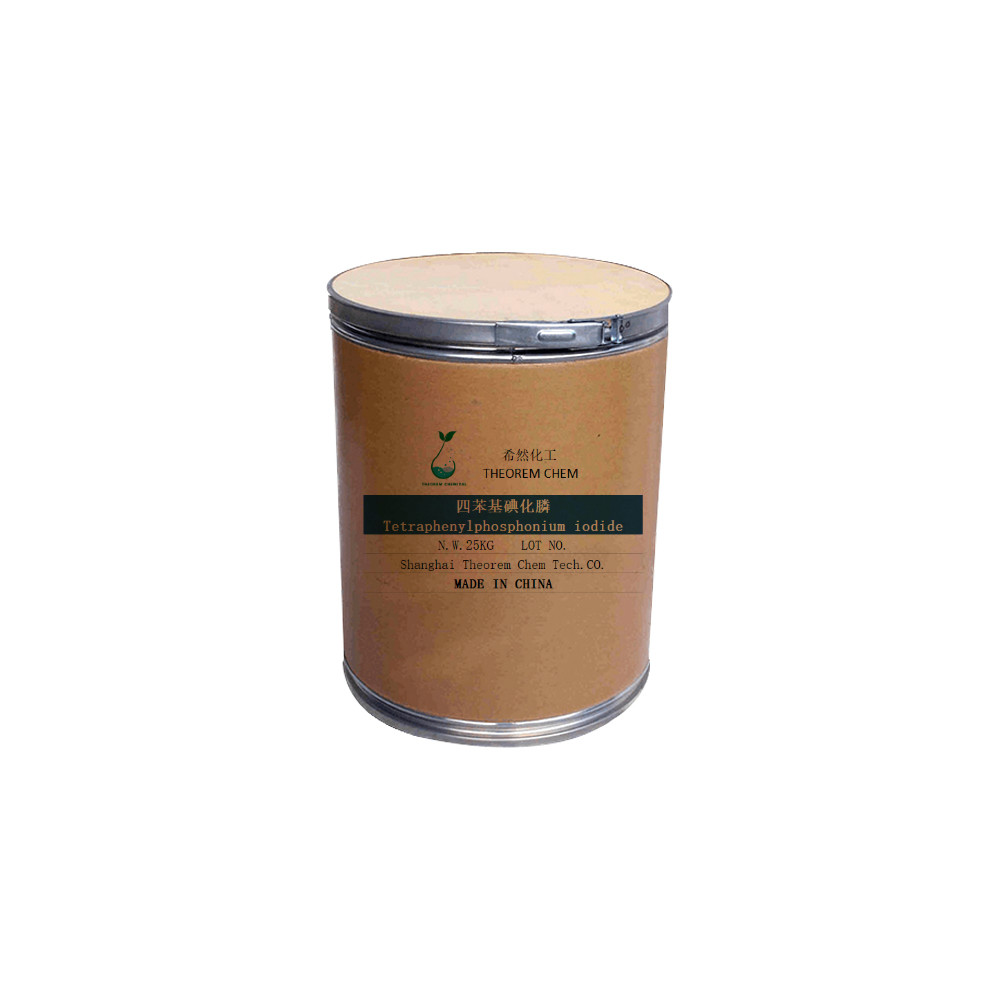

Good Quality N-(3-Aminopropyl)-N-Dodecylpropane-1,3-Diamine - High purity 99% Tetraphenylphosphonium iodide powder cas 2065-67-0 - Theorem
product detail

Application
It migrates quickly, reduces dynamic surface tension and static surface tension, defoams and inhibits foam, has low water sensitivity, can wet a variety of substrates, does not form micelles, has good thermal stability, and has good acid-base stability. Wetting water-based systems have higher surface tension than solvent systems and need to add surfactants to improve wettability. However, traditional wetting agents will cause foam and stabilizing foam. If defoamers are added, poor wetting problems such as pinholes will reappear.
It can avoid these problems. The performance is significantly better than traditional surfactants, and it can provide extremely low surface tension and foam suppression under dynamic conditions.
Due to its unique molecular structure, defoaming the item series surfactants are a good symmetrical non-ionic defoaming agent.
The surfactant has no cloud point and can have long-lasting defoaming properties in a wide temperature range. Water sensitivity Many surfactants cause water sensitivity problems on the coated surface after drying.
Highly hydrophilic surfactants such as anionic (dioctyl sulfosuccinate sodium salt) or polyethoxylated surfactants are easily re-dissolved in water, causing surface defects in the dried coating, such as stickiness, hair Whiteness, fogging, and poor water resistance.
Usage Notice
It is recommended to add emulsion or resin and other surfactants first,then add 2,4,7,9-Tetramethyl-5-decyne-4,7-diol series surfactants.This ensures maximum dispersion into the system, requiring thorough dispersion for 15-30 minutes. Some 2,4,7,9-Tetramethyl-5-decyne-4,7-diol series surfactants may crystallize during transportation or storage at extremely low temperatures; gentle heating during slight dispersion can restore them well.
Recommended Addition level USE :
Aqueous coating: 0.1%—3.0%
Aqueous pressure sensitive adhesives: 0.1%—1.0%
Fountain solution: 0.1%—1.0%
Jet ink: 0.1%—1.0%
The above data is the empirical amount, and the optimal dosage is determined by a series of tests
Application Guidelines
Advantages:
Spread rapidly,reducing dynamic and
static surface tension, defoaming, and antifoaming, low water
sensitivity, wetting various substrates without forming micelles.good
thermal stability and acid-alkali resistance.
Wetting:
Water-based systems have higher surface tension than solvent systems,and it is necessary to add a surfactant to improve the wettability.Traditional wetting agents often cause foam and stability issues. The series products can overcome these problems, offering superior performance in providing low surface tension and defoaming even under dynamic conditions.
Defoaming:
The series surfactants, with their unique molecular structure, act as excellent symmetric non-ionic defoaming agents. They exhibit persistent defoaming properties over a wide temperature range without clouding point.
Water Sensitivity:
Many surfactants cause water sensitivity issues on dried coating surface. Highly hydrophilic surfactants such as anionic (dioctyl sulfosuccinate) or polyethoxylate surfactants are easily resolubilize in water, causing surface defects in dried coatings such as stickiness and whitening, atomization, and poor water resistance.
Specification
|
Item |
Value |
|
Chroma/degree |
≤100 |
|
TMDD content/% |
47.5 - 52.5 |
|
Ethylene glycol content/% |
47.5 - 52.5 |
|
Static surface tension/mN/m |
29 - 30 |