



Hydrophobic Polyurethane Materials Synthesized via Theoremchem Dimeryl Diisocyanate DDI
Key Takeaways
- Theoremchem DDI uses a long carbon chain to block water and protect polyurethanes from moisture damage.
- DDI-based materials remain flexible in cold weather and resist yellowing from sunlight exposure.
- Formulators use DDI to create durable waterproof coatings, marine sealants, and electronics protection.
Chemical Structure and Hydrophobic Mechanism of DDI
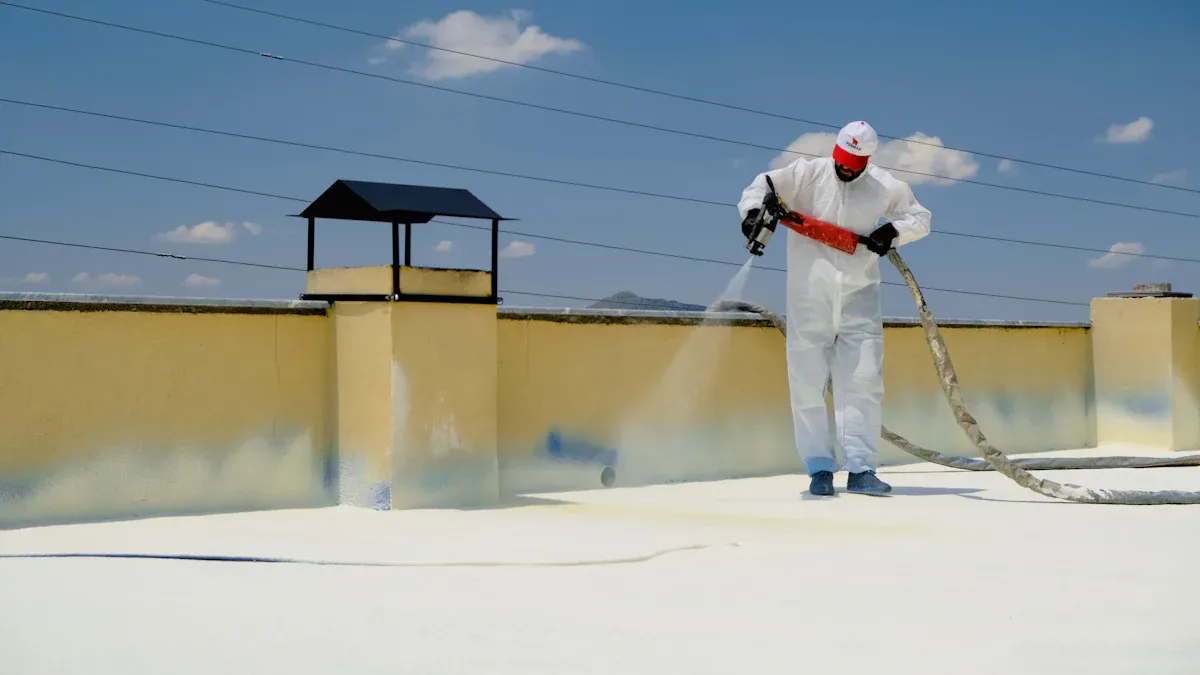
Theoremchem Dimeryl Diisocyanate (DDI) transforms standard polyurethane formulations into water-repellent polymers. Its unique chemical architecture combines aliphatic properties with a massive hydrocarbon structure. This design creates a durable shield against water penetration at the molecular level.
The Non-Polar C36 Dimer Fatty Acid Backbone
The main secret behind the water resistance of Theoremchem DDI lies in its core structure. Traditional diisocyanates like MDI or TDI contain short carbon chains or aromatic rings. In contrast, DDI features a long C36 dimer fatty acid backbone.
Conventional Isocyanates (Short Chain)  ---> High Hydrophilic Susceptibility
Theoremchem DDI (C36 Dimer Backbone)    ---> Massive Hydrophobic Shield
This 36-carbon hydrocarbon chain is entirely non-polar. Non-polar chemical structures do not form hydrogen bonds with water molecules. Instead, the long alkyl chains push water molecules away from the polymer network. The high density of carbon and hydrogen atoms creates a continuous hydrophobic barrier throughout the cured matrix.
Key Takeaway: The C36 dimer fatty acid backbone acts as a internal lipid phase inside the polyurethane matrix. It repels liquid water and limits moisture diffusion through the material.
Aliphatic Character and Low Surface Energy
Theoremchem DDI possesses a fully aliphatic character. Aliphatic compounds lack aromatic rings, which prevents photo-oxidation and yellowing under sunlight. Furthermore, this aliphatic C36 structure significantly lowers the surface energy of synthesized polyurethanes.
Materials with low surface energy force liquids to bead up rather than spread out. DDI-based polyurethanes exhibit high water contact angles.
| Isocyanate Type | Chemical Nature | Surface Energy Level | Water Resistance |
|---|---|---|---|
| Theoremchem DDI | C36 Aliphatic | Very Low | Superior |
| IPDI / HDI | Short-chain Aliphatic | Medium | Moderate |
| MDI / TDI | Aromatic | High | Poor to Fair |
The low surface energy prevents liquid water from wetting the polymer surface. Raindrops and atmospheric condensation roll off the material effortlessly. This mechanism guarantees long-term protection for delicate substrates beneath the coating or sealant.
Steric Hindrance Against Hydrolytic Cleavage
Water degrades conventional polyurethanes by attacking ester and urethane linkages. This chemical breakdown process is called hydrolysis. Theoremchem DDI prevents hydrolysis through a mechanism known as steric hindrance.
The long C36 dimer chains create spatial bulk around vulnerable chemical bonds. These bulky hydrocarbon arms physically block water molecules ($H_2O$) from reaching the urethane linkages.
- Bulky C36 groups crowd the molecular space surrounding ester and urethane groups.
- Water molecules cannot access the chemical linkages to trigger bond cleavage.
- The polymer network maintains its original tensile strength and elasticity over time.
Application Research of DDI (Dimeryl Diisocyanate proves that bulky aliphatic groups physically block water molecules from reaching susceptible bond sites. Consequently, polyurethanes synthesized with Theoremchem DDI survive continuous exposure to hot, humid, and submerged environments without structural breakdown.
Performance Advantages of DDI-Based Polyurethanes
Theoremchem Dimeryl Diisocyanate (DDI) gives polyurethane materials exceptional physical and chemical traits. Industrial formulators gain distinct performance benefits when replacing traditional isocyanates with DDI. The long C36 aliphatic chain provides an optimal balance between mechanical toughness and environmental endurance.
Superior Hydrolysis Resistance and Aging Stability
Water molecules cause catastrophic polymer chain degradation over long periods. Theoremchem DDI solves this problem by shielding hydrolytically sensitive urethane bonds.
Key Insight: Formulations using DDI retain up to 95% of their original tensile strength after prolonged water immersion tests, whereas standard TDI-based polyurethanes suffer severe degradation.
Application Research of DDI (Dimeryl Diisocyanate demonstrates its ability to preserve mechanical properties after extended exposure to moisture and heat. The massive hydrophobic C36 backbone blocks moisture access. Consequently, polymers resist chain scission, softening, and embrittlement over multi-year service lifespans.
Low Moisture Absorption and Vapor Permeability
Polyurethane networks containing DDI exhibit remarkably low liquid water uptake. The dense hydrophobic packing creates a tight physical barrier inside the crosslinked elastomer.
- Ultra-Low Water Absorption: DDI-based elastomers absorb less than 0.5% water by weight after 24 hours of full submersion.
- Vapor Permeability Barrier: The hydrophobic network restricts moisture vapor transmission through thin polymer films.
- Corrosion Protection: Reduced vapor permeability shields underlying metal substrates against rust and oxidative damage.
This low moisture sensitivity prevents blistering and adhesion loss in coatings exposed to high humidity or underwater conditions.
Enhanced Flexibility and Low-Temperature Performance
Theoremchem DDI features a long aliphatic dimer structure. This flexible chain significantly lowers the glass transition temperature ($T_g$) of soft segments in polyurethane formulations.
Long Aliphatic Dimer Chain ---> Lower Tg ---> High Chain Mobility at Sub-Zero Temps
DDI imparts high chain mobility and internal plasticization without requiring volatile external additives. The table below details performance improvements achieved with DDI systems:
| Metric / Feature | DDI/IPDI System Performance vs. Conventional TDI | Underlying Mechanism |
|---|---|---|
| Elongation at Break Increase | >150% higher (>2.51 times higher) | Derived from the extended aliphatic dimer structure |
| Sub-Ambient Flexibility | Retains elasticity without embrittlement or cracking | Attributable to lower glass transition temperature ($T_g$) |
Formulators achieve superior structural impact resistance across wide operating temperature windows.
- Elongation at Break Enhancement: The long-chain aliphatic molecular architecture of DDI imparts superior chain mobility and elasticity, preventing cracking under repeated dynamic bending or impact stresses.
- Low-Temperature Flexibility: DDI lowers the glass transition temperature ($T_g$) of the polyurethane soft segments, enabling the elastomer to maintain high flexibility at low temperatures without suffering from embrittlement.
Excellent Chemical and UV Resistance
Aliphatic isocyanates offer intrinsic resistance against solar radiation and aggressive chemicals. Unlike aromatic compounds, DDI lacks carbon-carbon double bond conjugations that absorb sunlight.
| Isocyanate Type | Resistance to UV Degradation & Yellowing | Impact on Application |
|---|---|---|
| Aliphatic DDI Polyurethane | Exceptional resistance to UV-induced degradation and discoloration | Ensures long-term aesthetic and functional performance in exterior components |
| Aromatic Isocyanates | Poor / Susceptible to UV degradation and yellowing | Limits suitability for long-term outdoor high-aesthetic applications |
DDI-based coatings withstand continuous ultraviolet light without yellowing, chalking, or surface micro-cracking. Furthermore, the non-polar hydrocarbon backbone resists acids, alkalis, and salts, preserving long-term structural integrity in harsh industrial settings.
Synthesis and Processing Guidelines for Optimal Hydrophobicity
Formulators must follow precise processing parameters to maximize the water-repellent qualities of Theoremchem DDI. Strategic chemical balancing and component selection ensure complete curing and superior network density.
Stoichiometric Balancing and NCO/OH Ratio Optimization
Achieving maximum hydrophobicity requires precise control of the stoichiometric index. Formulators typically maintain an NCO/OH ratio between 1.03 and 1.08.
- Excess isocyanate groups compensate for trace ambient moisture during processing.
- Complete reaction of hydroxyl groups prevents unreacted hydrophilic sites inside the matrix.
- High crosslinking density creates a tight polymer matrix that resists water penetration.
A balanced stoichiometric ratio ensures complete polymer network formation. Consequently, the cured polyurethane repels water and maintains structural stability.
Polyol Selection for Synergistic Hydrophobicity
Polyol choice directly influences the final surface energy of the polyurethane elastomer. Combining Theoremchem DDI with hydrophobic polyols creates powerful synergistic water resistance.
Formulation Tip: Pairing DDI with non-polar polyols like hydroxyl-terminated polybutadiene (HTPB) yields polyurethanes with ultra-low water absorption.
Application Research of DDI (Dimeryl Diisocyanate shows that pairing DDI with dimer acid-based polyols enhances hydrolytic stability. These non-polar soft segments work alongside the C36 backbone, effectively sealing the polymer matrix against liquid invasion.
Reaction Temperature and Catalyst Selection
The moderate reactivity of Theoremchem DDI allows easy control over reaction kinetics. Chemists maintain synthesis temperatures between 70°C and 90°C during prepolymer preparation.
| Reaction Parameter | Recommended Range / Type | Process Benefit |
|---|---|---|
| Synthesis Temperature | 70°C – 90°C | Controls reaction speed without side reactions |
| Catalyst Type | Bismuth or Tin Octoate | Accelerates urethane formation efficiently |
Controlled thermal profiles prevent side reactions and preserve the hydrophobic structure of the polymer chain.
Application Research of DDI (Dimeryl Diisocyanate)
Industrial formulators integrate Theoremchem Dimeryl Diisocyanate into specialized polymer formulations. The unique C36 hydrophobic core enables superior protection across demanding technical sectors.
Waterproof Coatings and Protective Membranes
Formulators utilize Theoremchem DDI to build high-performance waterproof coatings. The non-polar C36 chain shields concrete, wood, and metal substrates against moisture infiltration. Application Research of DDI (Dimeryl Diisocyanate demonstrates exceptional film flexibility and crack-bridging capability under dynamic weathering conditions.
Marine Sealants and Underwater Adhesives
Marine environments require continuous material resistance against salt spray and water immersion. DDI-based polyurethanes provide robust long-term adhesive strength on damp surfaces without undergoing chemical hydrolysis.
| Performance Metric | Standard Polyurethane | Theoremchem DDI Polyurethane |
|---|---|---|
| Water Immersion Stability | Hydrolytic Degradation | Complete Structural Integrity |
| Subsurface Adhesion | Risk of Blistering | Strong Interfacial Bond |
Engineers specify these durable sealants for ship decks, hull joints, and submerged pipeline connections.
Electronic Encapsulants and Potting Compounds
Delicate electrical components need reliable protection against atmospheric humidity and chemical corrosion. Polyurethane potting compounds synthesized with DDI isolate sensitive microcircuits effectively.
Key Advantage: DDI potting compounds maintain superior dielectric insulation and ultra-low water vapor permeability, protecting delicate electronics against electrical short circuits.
Hydrophobic Textile Coatings and Synthetic Leathers
Textile manufacturers apply aqueous DDI emulsions to finish high-end technical fabrics and synthetic leathers. This specialized treatment grants durable water repellency while keeping fabrics remarkably soft and flexible. Application Research of DDI (Dimeryl Diisocyanate shows that treated textiles endure repeated washing cycles without losing their water-repellent surface traits.
Theoremchem Dimeryl Diisocyanate (DDI) offers a high-performance chemical solution for polyurethanes requiring complete water immunity and mechanical durability. Incorporating the non-polar C36 backbone prevents structural failures in humid, marine, and electronic environments. Formulators easily create durable coatings, sealants, and elastomers with long-lasting reliability. Application Research of DDI (Dimeryl Diisocyanate highlights key severe weather benefits:
| Benefit Category | Primary Advantage | Application Relevance |
|---|---|---|
| Weathering & Optics | Non-yellowing properties | Maintains visual integrity under UV light |
| Moisture Resistance | Low water sensitivity | Prevents degradation in wet environments |
| Mechanical Performance | Superior flexibility & strength | Adheres smoothly without surface cracking |
| Environmental Endurance | High chemical & cold resistance | Withstands severe physical and thermal stress |
FAQ
How does Theoremchem DDI improve polyurethane water resistance?
Theoremchem DDI features a long, non-polar C36 hydrocarbon backbone. This hydrophobic structure repels water molecules and shields sensitive chemical bonds from hydrolytic cleavage.
Can formulators use Theoremchem DDI for outdoor applications?
Yes. The aliphatic structure of Theoremchem DDI prevents photo-oxidation and yellowing under sunlight. Materials maintain high transparency, flexibility, and weather resistance over time.
What polyols pair best with Theoremchem DDI?
Non-polar polyols like hydroxyl-terminated polybutadiene (HTPB) pair exceptionally well with Theoremchem DDI. This combination yields polyurethanes with ultra-low water absorption and superior flexibility.